Digital Marketing

Advertisers enter 2026 with new demands as Google Ads becomes more data-driven

q w auto 0, tags: google 2026 - unsplash
Digital Marketing

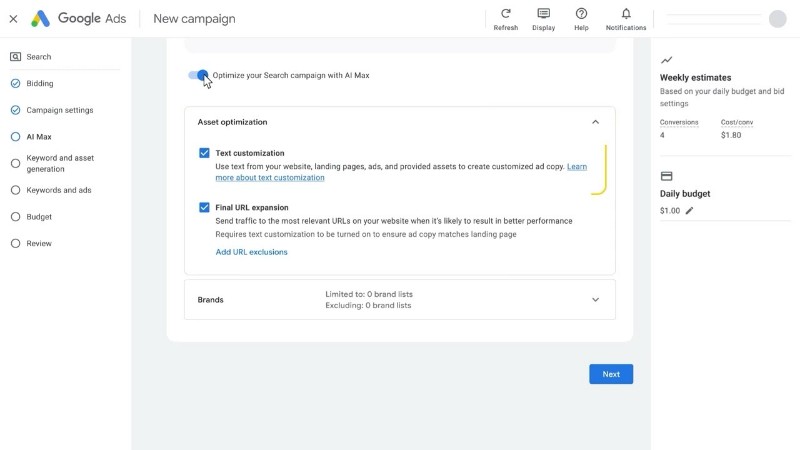
Marketers preparing for 2026 are confronting one of the fastest-shifting periods in Google Ads history. Companies seeking stronger performance now view a Google Ads agency or PPC marketing agency as essential partners as the platforms automation and targeting systems grow more advanced. Advertisers are adapting quickly because Google Ads management has become a data-heavy discipline that depends on continual adjustments and deeper analysis. Googles ad revenue climbed to 237.86 billion dollars in 2023, reinforcing its influence on global marketing budgets. The platforms expanding formats, from responsive and dynamic search ads to display, video, and shopping placements, provide broader reach but require more precise strategic alignment. Analysts note that outdated tactics struggle to compete with automated bidding and intent-driven ad delivery. Smarter keyword optimization Keyword strategy remains a key competitive factor. Advanced tools such as Keyword Planner, Ahrefs, and SEMrush help marketers balance volume, competition, and search intent. Negative keywords, first-party data, and careful match type selection improve efficiency as Googles systems interpret meaning rather than exact phrasing. Broader match settings can reveal new search behavior when paired with remarketing lists, while exact match maintains needed precision. Landing pages now carry greater weight in overall performance. High-quality pages must match ad messaging, load quickly on all devices, highlight a single offer, and guide users toward a clear call to action. Continuous A/B testing strengthens both engagement and conversion rates. Automation drives performance Automation plays an increasingly influential role. Smart Bidding, optimized targeting, Customer Match, lead form extensions, and CRM integrations help advertisers refine audiences and stabilize results as third-party tracking declines. Proper Google Tag implementation ensures measurement remains accurate across all pages. Experts agree that success in 2026 will rely on disciplined structure, sharper creative work, and a commitment to testing. Businesses that embrace advanced optimization within their Google Ads management are best positioned to secure stronger returns and long-term growth.

The hidden costs of ineffective Google Ads management

4 0 w, tags: google ads - unsplash
Digital Marketing

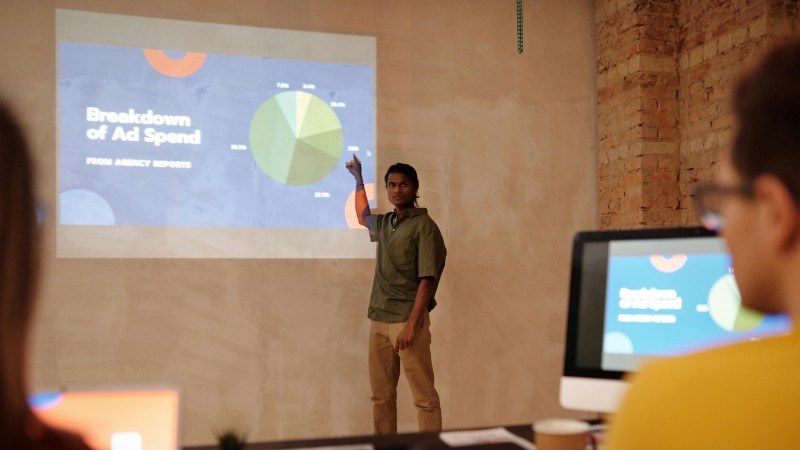
Businesses are spending record amounts to stay visible online. Global digital ad spending reached US$790 billion in 2024, with search and display ads driving most of that total. Yet high budgets do not guarantee success. When Google Ads management lacks clear strategy and accountability, even leading brands risk paying for performance that looks successful but drives no real results. How budgets disappear without precision Inefficient oversight turns Google Ads into a quiet drain on resources. A PPC marketing agency that neglects keyword precision, audience intent, or landing-page quality can burn through budgets in weeks. In 2024, advertisers lost over US$71 billion to fake and invalid traffic, a clear reminder of how quickly funds vanish when campaigns are not monitored properly. In sectors such as law or finance, where a single click can exceed US $8, each mismatch between targeting and intent slowly erodes return on investment. The data trap that misleads strategy Accurate reporting separates strategic PPC management from guesswork. Yet unreliable analytics and weak tracking remain widespread problems. Around 8.5 percent of paid traffic across major platforms is invalid, often generated by bots or click farms. When a Google Ads agency bases its decisions on distorted data, it risks scaling weak campaigns instead of correcting them, compounding losses under the illusion of progress. Why mismanagement hurts reputation too The damage goes beyond wasted money. Poorly managed campaigns can harm brand reputation. Irrelevant ads lower click-through rates, reduce Quality Scores, and raise future advertising costs. Over time, even trusted brands can appear careless or outdated. A capable Google Ads company knows that precision, transparency, and ongoing optimisation are essential. It treats advertising as a measurable growth system, not a one-off expense. Left unchecked, ineffective Google Ads management costs more than wasted clicks. It weakens strategy, trust, and competitiveness. The solution lies in expert oversight, disciplined data control, and continuous optimisation that turn every click into measurable value and lasting returns.

Advanced Google Ads optimization strategies for 2025

A MacBook Pro displaying Google Search on a wooden table outdoors, next to a smartphone. - A MacBook Pro displaying Google Search on a wooden table outdoors, next to a smartphone., tags: advanced ads optimization - pexel
Digital Marketing

In today’s digital landscape, mastering Google Ads has become crucial for businesses aiming to drive traffic and increase conversions. The competition is intensifying, and companies must adopt innovative approaches to stay ahead. Understanding the latest tools, trends, and bidding strategies can significantly improve campaign performance. By applying advanced techniques, marketers can achieve better visibility while optimizing budget efficiency. Enhance targeting with dynamic search ads Dynamic Search Ads (DSAs) allow advertisers to automatically generate ads based on the content of their website. This ensures that ads appear for highly relevant search queries, even for pages not explicitly listed in your account. Integrating DSAs into your campaigns can uncover additional traffic opportunities and reduce the manual effort needed to target specific keywords. Businesses using PPC management effectively can see higher engagement and more qualified leads, as DSAs help capture audiences actively searching for products or services. Optimizing DSAs requires careful monitoring of performance metrics. Ads should be aligned with landing page content to maintain relevance, while negative keywords prevent irrelevant clicks that could drain your budget. Experts recommend combining DSAs with a broader keyword strategy to balance automated targeting and manual control. Improve bidding and performance tracking Enhanced Cost-Per-Click (CPC) bidding automatically adjusts bids in real time to prioritize clicks most likely to result in conversions. This strategy reduces the need for constant manual intervention while improving return on investment. Coupled with the Google Ads Optimization Score, marketers can identify underperforming areas in their accounts and implement recommendations that significantly enhance results. For businesses aiming for precision, incorporating advanced tracking tools enables a more data-driven approach to Google Ads management, ensuring campaigns deliver measurable outcomes. Other essential tactics include optimizing for voice search, which is becoming increasingly relevant with the widespread use of smart speakers. Crafting conversational ad copy and incorporating long-tail keywords allows campaigns to capture this emerging audience. Additionally, video ads on platforms like YouTube can boost both engagement and brand visibility, reaching audiences who prefer visual content over text-based ads. For businesses looking to scale efficiently, partnering with a PPC marketing agency can provide expert guidance and access to industry-leading tools. A professional agency can combine automation, analytics, and creative strategy to refine campaigns and maximize conversion rates, making advanced Google Ads optimization a sustainable part of marketing efforts in 2025.

Two settings to stop wasted Google Ads spend

Samsung tablet on desk showing Google homepage, perfect for technology-related content. - Samsung tablet on desk showing Google homepage, perfect for technology-related content., tags: spend - pexel
Digital Marketing

Many advertisers rely on Google Ads to capture high-intent demand, but tight budgets magnify every inefficiency. Small setting choices and loose targeting can drain spend and blur the performance signals needed for better bidding and budgeting. A focused audit can reclaim budget without new tools. A Google Ads agency or a PPC marketing agency can help, but in-house teams can apply sound Google Ads management by prioritizing two checks that close the most common leaks. Search Partner Network outcomes and settings Segment performance by network to compare Google Search with the Search Partner Network. If partner clicks show weaker conversion rates or higher costs per acquisition, exclude partners at the campaign level and document the rule for new launches. Revisit the setting after notable changes to keywords, ads, or landing pages to confirm that efficiency still holds. Avoid a blanket policy. Brand campaigns sometimes perform well on partners while nonbrand terms do not. Keep inclusion as a time-bound test with clear thresholds for cost per acquisition, return on ad spend, and click quality. Use the search terms report to find irrelevant themes coming from partners and add negatives to shut them off before they consume more budget. Performance Max controls and negative keywords Create guardrails so Performance Max does not cannibalize branded demand. Use brand exclusions where available and cap budgets so nonincremental brand traffic does not crowd out prospecting. Split brand and nonbrand into separate campaigns and review the search terms and audience insights to see how assets are routing traffic. Move budget toward asset groups and campaigns that add conversions rather than the cheapest clicks. Tighten query control in Search. Pair broad match only with reliable conversion tracking, tested ad creative, and robust negative keyword lists. Use exact and phrase match for limited budgets or sensitive cost per acquisition targets. Refresh negatives after promotions or product changes to prevent paying for outdated queries, and layer account-level negatives to block job seekers, competitors that you do not want to target, and irrelevant use cases.

Proven ways to optimize Google Ads performance

person holding black android smartphone - Google search home page on a mobile phone, tags: ads - unsplash
Digital Marketing

Effective optimization starts with dependable measurement and clear objectives. Align account structure, creative assets, and budgets with the same conversion outcomes so every click is valued by revenue or qualified leads. Build the plan on verified tracking. Assign values to conversions, enable enhanced conversions, and use data-driven attribution so bidding learns from the full journey, including imported offline outcomes where available. Target ROAS, broad match and Quality Score Choose value-based bidding that matches goals. Target ROAS suits revenue or profit, while Target CPA fits lead volume. Test Maximize Conversion Value with an upper ROAS limit, compare results with experiments, and scale only when efficiency holds. Pair broad match with Smart Bidding to unlock incremental queries while keeping an exact-match brand campaign separate. Maintain shared negative lists, refine locations and devices, and pace budgets so daily caps do not throttle high-return periods. Performance Max and Customer Match playbook Adopt Performance Max when creative and feeds are ready. Provide quality video, images, and product data, apply brand restrictions and location controls, and review search terms and asset insights to steer volume toward profitable themes. Activate first-party data. Refresh Customer Match lists, segment high-value buyers, and apply value rules for margin or lead quality. Use remarketing to re-engage cart abandoners and recent visitors with helpful offers and clear calls to action. Strengthen Responsive Search Ads with varied headlines and descriptions. Include core keywords in several headlines, avoid excessive pinning, and rotate in new creative as fatigue appears. Add sitelinks, callouts, structured snippets, images, price, and promotion assets to lift intent. Tune landing pages. Speed up loads, simplify forms, and keep CTAs visible above the fold. Mirror ad language on the page, pass UTM parameters with auto-tagging, and connect analytics so spend maps cleanly to outcomes across channels. Whether you run campaigns in-house or with a Google Ads agency, insist on a quarterly audit. Document bid and budget changes, check consent and privacy settings, and verify conversions fire across markets. Strong PPC management and disciplined Google Ads management keep performance durable as platforms evolve over time.

Why avoiding these Google Ads mistakes will define your business’s 2026 growth

1 0 q w, tags: avoiding google 2026 - unsplash
Digital Marketing

As 2026 approaches, paid search advertising demands a sharper strategy and smarter spending. Many businesses lose valuable ad budgets not because of limited funds, but because of poor structure and weak alignment with their goals. You may wonder what separates thriving campaigns from those that quietly drain resources through costly mistakes. Here’s what truly drives performance in the year ahead. Build smarter, not bigger One of the biggest mistakes is overcomplicating campaigns. Too many ad groups, vague objectives, and premature use of advanced bidding tools often weaken performance. The best results come from starting with one focused campaign and expanding only when data supports it. A clean, goal-driven structure gives Google Ads strategies a stronger base for steady growth. Success also depends on linking paid search to real business priorities. Campaigns should serve clear outcomes such as acquiring customers, improving profit margins, or growing lifetime value—not just chasing clicks that fail to convert. Geographic precision is equally vital. Targeting broad regions wastes budget, while focusing on high-performing markets and using Google’s “Presence Only” setting improves conversion rates and cost efficiency. According to WordStream, the average cost per lead rose from $66.69 in 2024 to $70.11 in 2025, showing how tighter optimization matters more than ever. Landing pages must load quickly, match ad messages, and perform well on mobile. How smarter PPC management drives growth What if the key to PPC success in 2026 isn’t spending more, but managing smarter? Businesses that work with a skilled Google Ads agency or PPC marketing agency see the best results when the strategy stays simple and focused. Aligning campaigns with real business goals, targeting the right regions, and using automation backed by solid data all turn ad spend into measurable growth. That’s when PPC management stops being routine—and starts driving real performance.

The real difference expert Google Ads management makes in a market where precision matters

7 Common PPC Mistakes to Avoid for Effective Campaigns, Concept art for illustrative purpose, tags: google - Monok
Digital Marketing

Most businesses rely on Google Ads to reach new customers, yet many campaigns fall short of expectations. The challenge usually isn’t the platform itself—it’s how the campaigns are structured and managed. Weak keyword targeting, vague ad copy, and unoptimized landing pages often drain budgets long before results appear. Without consistent testing and performance analysis, even well-intentioned ads lose traction and return on investment declines. Effective Google Ads management relies on data, structure, and strategy. A skilled ad manager studies audience intent, refines keywords, and aligns ad messages with user behavior. Each click becomes part of a continuous feedback loop that strengthens performance and reduces waste. Advanced targeting, automated bidding, and A/B testing help ensure that every campaign reaches the right audience at the right cost. Precision defines Google Ads’ success Current figures highlight how crucial precision has become in digital advertising. According to DemandSage, Google Ads holds about 80.2% of the global PPC market, with well-managed campaigns earning roughly double the return on every dollar spent. Medium adds that 65% of industries improved conversion rates in 2025 despite rising costs, showing how smart management keeps performance strong even in competitive markets. Successful advertisers now view Google Ads as a living system shaped by continuous measurement and refinement. Each keyword, headline, and landing page adjustment plays a role in sharpening audience targeting and improving lead quality. That constant evolution raises an important question: how many businesses look closely enough at their data to see what truly drives conversions? With help from a skilled Google Ads agency, campaigns gain the focus needed to perform better. Managed with expertise and constant optimization, Google Ads becomes a reliable source of visibility, engagement, and growth.

The costly truth about Google Ads — and how savvier management could sort it out

1 0 fit w, tags: google ads - unsplash
Digital Marketing

Many British businesses plough thousands into Google Ads every year—yet a fair chunk of that budget never actually delivers. In an ever-more competitive digital marketplace, success isn’t about how much you splash out, but about how shrewdly those pounds are stewarded through proper PPC management. The real question is: how many firms truly know where their advertising money is going, and whether those clicks are turning into bona fide customers? With the right structure, analysis and professional oversight, that outlay can shift from squandered potential to measurable, long-term growth. Unlocking genuine Google Ads performance Google Ads remains a powerful driver of visibility and sales, with more than 80% of global companies—and most UK SMEs—leaning on it to reach customers. The platform’s potential is undeniable: on average, businesses pocket return of £2 for every £1 they sink into pay-per-click (PPC) advertising. Even so, 72% of companies admit they haven’t reviewed their campaigns in over a month, allowing inefficiencies to bleed budgets dry. Aligning campaigns with business objectives, continual optimisation, and tracking performance metrics that mirror real-world returns are the bedrock of profitable, efficient advertising. Yet only around 10% of advertisers tweak their Google Ads accounts each week, showing just how few truly exploit the performance data on offer. Sorting costly ad blunders Savvy bidding counts, too. A seasoned ad manager knows when to stick with manual cost-per-click for greater control and when to deploy automated strategies like Target ROAS or Enhanced CPC, which harness data to boost conversions. Well-run campaigns don’t merely convert—they build brand recognition, with paid ads shown to lift awareness by up to 80%. Handled properly, effective Google Ads management enables small British firms to stand toe-to-toe with bigger brands, turning ad spend from a short-term cost into a sustainable investment that fuels steady growth.

Why UK firms keep chucking millions down the drain on Google Ads — and how to stop it

1 0 w, tags: uk - unsplash
Digital Marketing

Why do so many UK businesses keep chucking money at Google Ads yet struggle to see proper results? Despite swelling digital budgets, plenty of firms still sign long-term ad deals before proving whether pay-per-click (PPC) advertising can actually deliver profitable enquiries. The smarter move is to start small—testing, gathering real data, and teaming up with a Google Ads agency that values transparency and solid PPC management over empty promises. A practical fix is to launch a pilot campaign—a short-term, low-risk trial that shows whether Google Ads is a good fit for the business. Running for a month or two, it gauges genuine lead quality, cost per enquiry and conversion potential, all without a hefty commitment. Building a solid campaign foundation Each pilot packs in in-depth keyword research, ad creation and a focused lead-generation microsite, backed by constant monitoring and analysis. The set-up usually comes in at around £1,000–£2,000, excluding Google’s pay-per-click costs, with crystal-clear spending caps agreed up front for full transparency. Many dire Google Ads performances boil down to shaky campaign set-up. Using click-based bidding or broad-match keywords too early often fritters cash away on irrelevant clicks. Instead, new campaigns fare better with exact-match keywords that home in on high-intent searchers. A robust list of negative keywords also helps weed out time-wasters. Setting low CPC bids or switching on Search Partners and the Display Network too soon will likewise attract tyre-kickers that chew through the budget. Judging PPC agency performance For British businesses wondering how to tell if their PPC marketing agency is actually pulling its weight, the answer lies in measurable performance and plain speaking. A trustworthy Google Ads agency zeroes in on conversions rather than clicks, lays out data in black and white, and tweaks campaigns off the back of real-world numbers. That way, hunches give way to hard evidence, allowing companies to make informed calls and secure long-term advertising success.