Author name: PPCJuice

Four pillars to achieving AI excellence in PPC marketing
4 Pillars to Achieving AI Excellence in PPC Marketing, Concept art for illustrative purpose, tags: artificial intelligence driving significant advancements pay-per-click advertising, reshaping businesses optimize - Monok
Digital Marketing

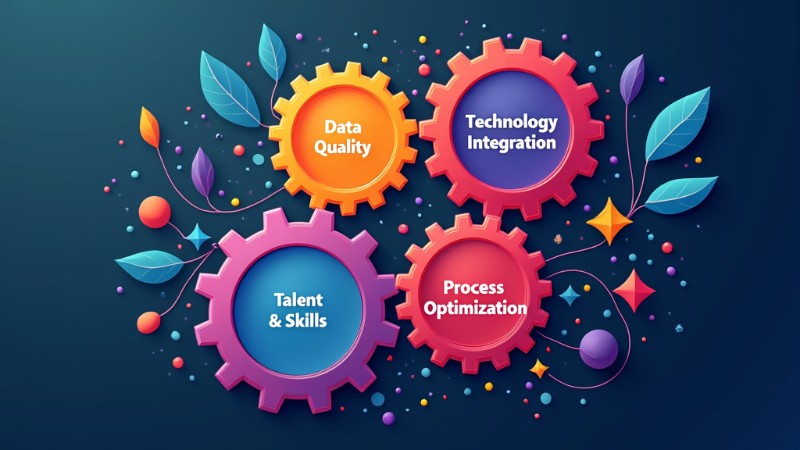
Artificial intelligence (AI) is driving significant advancements in pay-per-click (PPC) advertising, reshaping how businesses optimize their campaigns. Google and Boston Consulting Group have identified four essential pillars for marketers looking to achieve excellence with AI. This framework enhances efficiency and delivers tangible results that can boost business outcomes. Businesses at the forefront of AI adoption report 60% higher revenue growth compared to those in the early stages of AI integration. These leaders leverage advanced AI capabilities to optimize strategies and personalize user experiences, driving superior performance. How AI impacts Google ads is evident in its ability to automate bid adjustments and audience targeting, leading to higher conversion rates. The AI journey in PPC marketing The journey towards full AI transformation begins with basic adoption and progresses through several stages. Currently, only 19% of companies have achieved AI leader status by incorporating sophisticated AI strategies into their marketing efforts. AI leaders differentiate themselves by harnessing six fundamental strengths. For example, an online retail company reduced budget forecasting time by two-thirds whilst increasing brand awareness by 11% through AI-driven predictive models. Moreover, AI-powered Google ads tools optimise ad spending based on real-time performance metrics. Key pillars of AI-driven PPC success Success in AI-driven PPC marketing begins with establishing robust measurement systems. AI-powered tools continuously collect and analyse data in real-time, allowing marketers to refine their strategies based on actionable insights. By leveraging historical performance analysis, businesses can make accurate predictions and optimise campaigns for better results. Top PPC trends for advertisers in 2025 include AI-driven predictive analytics to enhance ad targeting. Beyond measurement, AI plays a critical role in media optimization. By enhancing budget allocation and audience targeting, AI ensures that campaigns reach the most relevant users. The future of PPC automation will likely see deeper AI integration, enabling advertisers to dynamically adjust bids and tailor ad messaging to user intent in real-time. Another key advantage of AI is its ability to streamline content creation. Generative AI tools such as Copy.ai simplify crafting ad copy and social media posts whilst maintaining brand consistency. AI leaders rigorously test and optimise campaigns before launch, ensuring messaging aligns with user preferences. In addition, Google ads AI strategies involve automating ad copy generation to improve engagement and response rates. To fully unlock AI’s potential in PPC marketing, companies must invest in talent development and seamless AI integration. Building specialised teams capable of driving AI-powered strategies is essential for success. Redesigning workflows to accommodate AI tools and fostering collaboration across departments maximises efficiency. As AI adoption grows, marketing teams must work closely with other business functions to harness AI’s full capabilities. Emerging trends in PPC 2025 suggest that AI-driven automation will dominate paid advertising, allowing businesses to scale their campaigns efficiently. The future of AI in PPC A staggering 95% of businesses believe that AI will play a critical role in shaping the future of PPC marketing. The key challenge lies in understanding one’s position on the AI adoption spectrum and taking actionable steps toward full implementation. In 2025, AI-driven tools will be essential for automating tasks, optimizing campaigns, and enhancing creativity. As AI continues to evolve, businesses must adapt to stay ahead in the competitive digital marketing landscape. Some key examples of AI in PPC strategy include automation software like Asana, which streamlines project management and enables teams to focus on strategic planning. Additionally, SEO AI tools enhance rankings by generating search-engine-optimised content, thereby increasing visibility and engagement. Furthermore, AI-driven social media management platforms analyse real-time engagement metrics, providing valuable insights for campaign adjustments. AI is revolutionizing PPC marketing by increasing efficiency, boosting engagement, and driving revenue growth. By embracing AI-driven measurement, media optimization, content creation, and talent development, businesses can achieve a competitive advantage. Companies that integrate AI effectively into their PPC strategies will thrive in the evolving digital landscape, securing a stronger market position and greater financial success.


Google revamps advertising policy for real-money games internationally

Close-up of hands holding a tablet showing the Google search page. - Close-up of hands holding a tablet showing the Google search page., tags: real-money games - pexel
Policy Updates

In a bid to enhance user safety and compliance, Google has announced significant Google Ads gambling policy updates that will affect advertisers promoting real-money games outside of India. This change is expected to bring stricter control over gambling-related advertisements across various digital platforms. The new Google Adverts gambling rules aim to ensure that gambling promotions are presented in line with global regulations, fostering a more secure environment for users. The platform will continue to allow advertisements for Daily Fantasy Sports and Google spokesperson Stricter Guidelines and Regional compliance These updates respond to growing concerns about online gambling, with Google tightening advertiser requirements. According to the Google Ads gambling compliance news, businesses must now undergo more thorough vetting and certification, ensuring compliance with local regulations in the regions where their ads will run. Additionally, Google is expected to enforce gambling advert policy changes across various regions, including those with significant online gambling activity. These changes align with the anticipated Google Ads gambling regulations for 2025, where advertisers may need to be certified by both Google and relevant local authorities. This shift aims to improve accountability and transparency in online gambling advertising, responding to growing calls for stricter advertising practices globally. A Safer Digital advertising landscape The latest Google Adverts gambling compliance measures will undoubtedly impact the way gambling adverts are displayed, with Google seeking to create a more responsible advertising environment. Advertisers promoting online gambling must comply with the online gambling advertising policy Google has set, which includes more stringent checks on targeting, content, and advert placement. Regulation will not fix something that has a rotten character. These apps need to be banned Mr. Goel an industry expert in digital marketing and compliance These updates also underline Google’s growing role in enforcing responsible online gambling practices, with a focus on consumer protection. The new Google Adverts gambling policies represent a significant step towards ensuring that gambling adverts are clear, transparent, and in line with the latest international standards. For businesses involved in online gambling advertising, these changes mark an important shift in how adverts are regulated, particularly in light of the upcoming Google Ads gambling regulations for 2025. Keeping up with these shifts is essential for staying compliant and ensuring adverts do not violate the platform’s stringent guidelines. For more information on Google’s updated policies, visit their official guidelines.

Google’s updated gambling and games Ad Policy

A MacBook Pro displaying Google Search on a wooden table outdoors, next to a smartphone. - A MacBook Pro displaying Google Search on a wooden table outdoors, next to a smartphone., tags: gambling policy - pexel
Policy Updates

Starting April 14, 2025, Google will introduce stricter advertising rules for gambling and gaming platforms. The revised policy clearly defines gambling-promoting content as any material that facilitates gambling services or provides direct links to online gambling platforms. Aggregator and affiliate websites will still be allowed to share information about authorised gambling services, but any activity beyond that will face restrictions. The policy update also details country-specific regulations, listing nations such as Bulgaria, China, and Egypt, where all offline gambling adverts are banned. Whilst the UK has established gambling regulations, advertisers should review these changes to ensure compliance when targeting international audiences. 🚨 Big Update for Advertisers! 🚨 Google has reversed its stance on Performance Max campaign controls, giving advertisers more flexibility and better optimization options. 🎯 Find out what this means for your ads and how you can leverage these changes for better ROI! 💡📈 pic.twitter.com/48FoBnjVcl — MakkPress Technologies Pvt Ltd. (@MakkpressTech) February 10, 2025 Social casino games—those that mimic gambling but do not offer real-money rewards—will now require certification in certain regions. A new policy clause also prohibits the promotion of mahjong involving real money in the Asia-Pacific region. Google’s definition of online gambling is expanding to include casino-style games that use virtual currencies or digital items with real-world value, meaning games with in-game purchases or tradable assets could now fall under stricter gambling rules. Advertisers must maintain valid licences and report any suspensions or revocations to Google, or they risk account suspensions. How this affects skill-based games in the UK A key policy change is the inclusion of non-casino skill-based games—such as chess and pay-to-play multiplayer games with real-money prizes—under Google’s advertising framework. Previously, adverts were mainly limited to traditional gambling and fantasy sports, but now skill-based games with entry fees and cash rewards can apply for certification and advertise, except where gambling adverts are banned. 💥Today, we became the first council in the UK to join the Coalition to End Gambling Ads @EndGamblingAds We are dedicated to ensuring that gambling harms do not affect our communities. This is the latest action in a long series we have taken to tackle gambling harms. pic.twitter.com/D80Mkpc8XN — Haringey Council (@haringeycouncil) January 30, 2025 This update may affect gaming platforms, as UK laws distinguish between skill-based games and games of chance. While the Gambling Commission regulates traditional gambling, skill-based games follow different rules. Meta already allows adverts for these games based on legal guidelines, and Google is expected to do the same. Real-money gaming platforms see this as a chance to expand their reach whilst staying compliant. Advertisers should review the new policy and secure the necessary certifications to continue advertising on Google.

Google edit Super Bowl advert after Gouda cheese claim sparks backlash

Video Screenshot, tags: google super bowl advert gouda cheese - Youtube
Digital Marketing

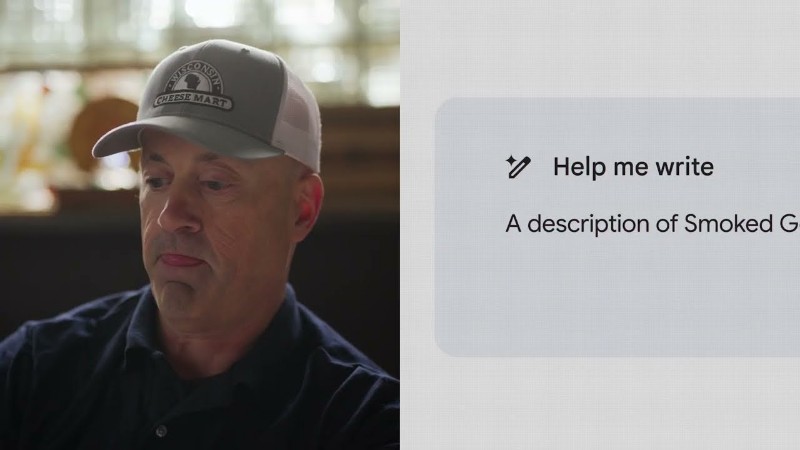
Google recently revised its Super Bowl ad after an incorrect claim about Gouda cheese consumption drew widespread criticism. The ad, featuring Wisconsin Cheese Mart, initially stated that Gouda accounted for 50 to 60 per cent of global cheese consumption. Once the advert aired, social media users and cheese industry experts quickly pointed out the inaccuracy. The backlash led Google to remove the statistic, raising concerns about the accuracy of automated content in advertising. This situation also sheds light on emerging trends in PPC in 2025, as businesses increasingly rely on automation whilst facing challenges in ensuring factual correctness. With Google integrating AI-powered features into its advertising tools, brands must balance efficiency with accuracy. The future of PPC automation depends on refining content generation processes while maintaining credibility. Key Takeaways Google revised its Super Bowl ad after an incorrect claim about Gouda cheese consumption sparked widespread criticism. Google removed the inaccurate statistic from their ad following public backlash. This incident highlights the need for stronger fact-checking processes in AI-generated content. Businesses must balance the efficiency of automation with maintaining accuracy and credibility. Google and Wisconsin Cheese Mart respond After the mistake gained attention, Google acted swiftly to edit the advert and remove the claim. Ken McNulty, owner of Wisconsin Cheese Mart, explained that he had initially found the statistic in an online source. However, once he realised it was inaccurate, he asked Google to revise the advert. McNulty still believes that AI-powered tools, such as those used in Google Ads AI strategies, can be beneficial for businesses. They help with tasks like writing product descriptions and crafting marketing content. However, he stressed the importance of reviewing any generated information before using it in public campaigns. This incident fuels ongoing discussions about how AI impacts Google Adverts and whether automated tools should include stricter fact-checking features. Whilst these systems can speed up content creation, they still require human oversight to prevent errors that could damage brand credibility. In Google's Wisconsin local Super Bowl ad, an AI hallucination is shown on screen: It says *Gouda* accounts for "50 to 60 percent of the world's cheese consumption." Gemini provides no source, but that is just unequivocally false Cheddar & mozzarella would like a word… pic.twitter.com/UwIBHAO4x6 — Nate Hake (@natejhake) January 31, 2025 The increasing role of automation in marketing Despite this misstep, many businesses continue to invest in automation for their advertising efforts. Technology is now central to content creation, from social media posts to product descriptions and email campaigns. According to research from Statista, 31% of marketing professionals use AI for social media content, 28% for email communication, and 25%for product descriptions. As businesses embrace AI-powered Google Ads tools, they must also ensure accuracy in the materials they produce. Google has been actively promoting its AI-driven advertising solutions, positioning them as valuable assets for small businesses. Larger brands like Coca-Cola are also experimenting with cross-channel PPC innovations, using automation to personalise customer experiences. As Google Ads privacy updates and automation continue to reshape digital marketing, advertisers must strike a balance between leveraging new tools and maintaining content accuracy. Better oversight in automated advertising The Gouda cheese controversy serves as a reminder that businesses should not rely entirely on automation for marketing. While these tools offer efficiency, they do not always guarantee accuracy. Google’s decision to correct the mistake reflects broader concerns about Google Ads bidding trends and how automation can sometimes generate misleading claims. Moving forward, businesses must integrate stronger fact-checking processes to avoid similar errors. Advertising success depends on accuracy and trust. Companies that rely on automation must take responsibility for reviewing information before publishing it. This helps maintain credibility while ensuring that marketing campaigns deliver reliable messaging. Hey Nate – not a hallucination, Gemini is grounded in the Web – and users can always check the results and references. In this case, multiple sites across the web include the 50-60% stat. Gouda news: many love this cheese! Bada news: not everyone thinks it's as grate. 🧀 — Jerry Dischler (@jdischler) February 1, 2025 The risks of misinformation in advertising Marketing campaigns depend on trust. Consumers expect brands to provide accurate information, and a single mistake—especially one that spreads widely—can harm a company’s reputation. The backlash against the Gouda cheese claim shows how even a minor error can escalate into a larger issue. Misinformation in advertising can stem from various sources, whether incorrect data from unreliable sources or content being generated too quickly without thorough review. The controversy surrounding the Super Bowl ad highlights why companies must verify information before including it in their campaigns. In this case, the incorrect Gouda cheese statistic did not cause lasting damage, but it sparked concerns about how businesses vet their marketing materials. It also raised questions about evolving ad formats in PPC, particularly as automation plays a greater role in content creation. For companies like Google, the lesson is clear—speed and efficiency should not come at the expense of accuracy. As more businesses embrace top PPC trends for advertisers, they must also implement stronger fact-checking measures to avoid spreading misinformation and maintain consumer trust.

Australian senator calls for investigation into gambling advert’s influence

h, tags: pocock gambling - images.pexels.com
Policy Updates

Independent Australian senator David Pocock has called for an inquiry into the gambling industry’s influence on government policy, particularly regarding online gambling reform. His move comes as pressure grows to ban gambling advertisements, especially on digital platforms. Pocock wants to examine how gambling companies may influence government decisions, specifically the response to a landmark gambling harm enquiry, which recommended phasing out gambling adverts. Gambling industry influence under scrutiny Pocock is pushing for the issue to be referred to a Senate committee for investigation. He has expressed frustration that no action has been taken on the issue despite broad support for the inquiry’s recommendations. ‘This is a public health issue,’ Pocock said, emphasising the need for reform to protect vulnerable groups from gambling-related harm. the extent and the appropriateness of industry influence over government decision-making as it relates to online gambling reform David Pocock In line with these concerns, the Australian Greens have introduced a bill proposing to ban gambling adverts before and after sports broadcasts and during children’s programming, capping adverts at two per programme. The Labour Party had also proposed similar measures but has yet to release a formal policy. The government has stated it is still consulting with industry stakeholders before moving forward with reforms. Are online gambling advert policies about to change The gambling industry, however, has resisted a blanket ban, with groups like Responsible Wagering Australia warning that such measures could push people to unregulated offshore sites. They advocate for restrictions aimed at protecting children and vulnerable groups without completely stifling the industry’s advertising capacity. reduce children’s and vulnerable groups’ exposure to gambling advertising Kai Cantwell CEO of Responsible Wagering Australia As the debate intensifies, this issue is expected to impact global gambling advertising policies, particularly in the UK, where digital gambling adverts are under increasing scrutiny. With growing calls for reform, significant changes in how gambling adverts are regulated could be on the horizon. To learn more about the UK’s stance on gambling regulations and advertising, check out the UK Gambling Commission’s guidelines on advertising.

Ladbrokes ad on baby monitor app sparks controversy over Google Ads gambling policy updates

Urgent Call for Gambling Ad Reforms Amidst Parental Concerns, Concept art for illustrative purpose - Monok
Policy Updates

There’s growing concern over gambling adverts after one for Ladbrokes showed up on a baby monitor app. The app, called YCC365 Plus, is usually used for home security but parents often use it to watch their babies. The advert offered a £30 welcome bonus and has led to criticism from those pushing for tougher rules on gambling adverts. This incident has sparked a debate about how well current advert rules are working, with critics saying gambling companies are still reaching people they shouldn’t. Ladbrokes’ parent company, Entain, mentioned the advert didn’t break their rules because the app is seen as a home monitoring tool, not a kids’ product. However, reform supporters view this as a sign that rules aren’t strong enough. Advocates like Don Foster and the Coalition to End Gambling Adverts argue that changes are needed now, as gambling adverts are common in everyday digital spaces. Will Prochaska from the coalition pointed out that incidents like this show how gambling companies advertise aggressively, putting at risk groups like parents. Google’s gambling advert policies and compliance measures Google enforces strict rules on gambling adverts, allowing them only in approved areas with responsible gambling messaging and restrictions on targeting minors. Advertisers must obtain certification and follow local laws, or risk ad bans, account suspensions, or reduced reach. Some formats, like Gmail and Shopping adverts, are entirely restricted. However, the Ladbrokes incident highlights ongoing challenges in ensuring these adverts reach only the intended audience. Calls for stricter regulation amid rising concerns A gambling advert appearing on a baby monitor app has led to stronger calls for tighter ad regulations. Critics believe that relying on gambling companies and platforms like Google to regulate themselves isn’t enough to stop these errors. There have been similar incidents before, where gambling adverts supposedly reached new parents through affiliate marketing. Even though gambling companies say they follow advert rules, campaigners argue that loopholes let adverts reach the wrong audiences.

AI takes the wheel in 2025 PPC marketing

w h, tags: ppc - images.pexels.com
Digital Marketing

In 2025, automation is no longer just a supporting act—it has become the architect of precision, efficiency, and personalization. Machine-driven strategies are rewriting the rules, pushing businesses to navigate an ecosystem where real-time data and predictive insights dictate success. As search engines and social platforms refine their AI-powered models, PPC is evolving beyond simple automation into a realm of intelligent, self-optimizing campaigns that demand a new level of strategic adaptation. Key Takeaways In 2025, artificial intelligence is revolutionising PPC marketing through precision, efficiency and personalisation. AI predicts user intent accurately, optimising ad placements in real-time. Creative optimization with AI generates tailored ad variations for different audience segments. The role of human marketers remains crucial alongside AI to ensure ethical and compelling campaigns. AI-driven precision in PPC campaigns Gone are the days when PPC managers relied solely on historical data and manual adjustments to optimise campaigns. AI can now predict user intent with remarkable accuracy, ensuring that adverts reach the right audience at the right time. Google’s Performance Max campaigns and Meta’s Advantage+ leverage deep learning to automate bidding, creative selection, and audience targeting. This level of automation allows businesses to achieve higher conversions whilst minimising ad spend waste. One of the biggest shifts in PPC is the increasing reliance on AI-powered bid strategies. Instead of setting bids based on fixed parameters, AI continuously adjusts bids in real-time, factoring in device type, location, search behaviour, and even external factors like weather conditions. The result is a more dynamic and adaptive bidding system that outperforms traditional methods. Moreover, AI-driven creative optimisation is changing how advertisers approach ad copy and visuals. With natural language processing (NLP) and computer vision, AI can generate ad variations tailored to different audience segments. This means that rather than A/B testing a handful of creatives, marketers can deploy hundreds of variations simultaneously, ensuring that each user sees the most relevant message. The evolution of keyword strategy Search intent is evolving, and AI is at the forefront of redefining keyword strategies in 2025. With search engines prioritizing conversational queries and long-tail keywords, traditional keyword research methods are no longer sufficient. AI-powered platforms analyze vast amounts of search data to identify emerging trends, helping advertisers stay ahead of shifting consumer behavior. Voice search and AI-driven chatbots have also influenced keyword targeting. As more users rely on virtual assistants to find information, PPC strategies now focus on optimizing for natural language queries rather than rigid keyword matching. This shift has made AI’s role in PPC more critical than ever, as it can analyze and predict how people phrase their searches and dynamically adjust campaigns accordingly. Another major change is the decline of manual keyword bidding in favor of AI-driven semantic analysis. Google and Bing’s algorithms now understand context more effectively, allowing PPC campaigns to prioritize relevance over exact keyword matching. This means that advertisers must rethink their approach, focusing on broader themes and intent-driven targeting rather than relying on exact-match keywords. The combined powers of AI and human creativity AI-powered predictive analytics help brands anticipate customer needs before they even express them. By analysing past behaviour and purchase patterns, AI can determine which users are most likely to convert and serve them with highly relevant ads. This predictive capability is particularly valuable for retargeting campaigns, where AI identifies the ideal moment to re-engage potential customers without appearing intrusive. Additionally, AI facilitates cross-channel PPC strategies by seamlessly integrating data from multiple platforms. Whether a user interacts with a brand through Google Ads, social media, or email marketing, AI unifies these touchpoints to deliver a consistent and personalized experience. While AI continues to dominate PPC automation, the role of human marketers remains crucial. AI excels at processing vast amounts of data, detecting patterns, and making real-time adjustments, but human intuition is still needed to craft compelling narratives, oversee brand messaging, and set strategic goals. The most successful PPC campaigns in 2025 are those that combine AI-driven automation with human creativity and ethical oversight. Marketers must ensure that AI-generated content aligns with brand values and does not inadvertently produce misleading or insensitive messaging. As AI takes centre stage in PPC automation, businesses that embrace its capabilities will gain a competitive edge. However, the key to success lies in balancing automation with human expertise—ensuring that AI enhances, rather than replaces, the art of digital advertising.

Charities face new challenges on Google Ads

w h, tags: trade mark policy - images.pexels.com
Policy Updates

Google’s July 2023 trade mark policy update has made digital advertising more challenging for nonprofits. The new rules allow advertisers to use third-party trade marks in their ads as long as they remain transparent about their services. Whilst the policy aims to promote competition, it has created significant hurdles for charities relying on Google Ads to fundraise and maintain visibility. Overview of policy changes This policy shift has sparked concerns among regulators and industry experts, who argue that Google’s changes disproportionately harm smaller organisations. Nonprofits, often operating with limited resources, struggle to compete in the increasingly aggressive ad auctions. Critics also highlight the broader implications of Google’s market power, suggesting that such policies may deepen inequalities in digital advertising. Google has stated that nonprofits can request the removal of unauthorised ads using their trade marks. However, many charities find it difficult to navigate these processes while managing the surge in competition. Regulators are now scrutinising Google’s practices, raising questions about whether the tech giant’s approach undermines fair competition. Impact on nonprofits As non-profits adapt to this challenging environment, they face an uphill struggle to protect their online presence and sustain donor engagement. The long-term impact of Google’s policy change may reshape the digital advertising landscape, leaving non-profits to bear the brunt of rising costs and diluted visibility. Non-profits like Samaritan’s Purse and St Jude Children’s Research Hospital have reported a surge in competition from smaller search engines such as Info.com and Ask Media Group. These entities bid on keywords related to the non-profits’ names, sometimes using misleading headings that divert potential donors to unrelated sites. As a result, charities are forced to increase their ad budgets to retain visibility, with some spending up to double their usual amounts. Many non-profits in the UK are indeed utilising Google Ad Grants to help offset advertising costs, which provide up to £8,000 per month in free advertising credits. However, some organisations find it necessary to supplement this with additional fundraising efforts to expand their reach beyond what the grant allows. The updated trade mark policy by Google has inadvertently placed non-profits at a disadvantage in the digital advertising landscape. Non-profits are now compelled to adapt quickly to these changes or risk losing critical funding sources.

How Google’s AI overview transforms search and business strategies

How Google's AI Overview Shifts Search Landscape Impacts Business Strategies, Concept art for illustrative purpose - Monok
Artificial Intelligence

Google’s introduction of the AI Overview feature has transformed how users interact with search results, reshaping online search behaviour and impacting businesses worldwide. This AI-powered tool delivers concise answers directly within Google Search results, reducing the need for users to visit external websites. While it enhances convenience for users, businesses that rely on organic traffic are facing significant challenges. By prioritising direct answers, Google has diminished the volume of traffic to external sites, leaving industries like travel and tourism particularly vulnerable. Online travel agencies such as Kayak have reported notable decreases in website visits. Similar patterns are emerging across other sectors that depend on search engines to drive traffic, forcing businesses to rethink their strategies to maintain visibility. Shift in strategies To adjust to these new dynamics, companies like Kayak have started revising their advertising approaches. Kayak is paying higher rates for adverts displayed in the AI Overview section to counteract declining click-through rates. This increased ad spend reflects the competitive environment for visibility within AI-generated results but also underscores the growing financial pressures businesses face in this space. Meanwhile, the tourism sector is feeling the impact of these changes. Tripadvisor, for example, is focusing on improving its content ranking and presentation to stay competitive. Such approach highlights the importance of adaptability but also raises concerns about whether smaller players can keep up with the resources required to optimise their content for AI-driven platforms. As AI continues to influence search behaviour, its role in shaping search results is expected to grow. Changing habits Google’s AI Overview has fundamentally altered how users access and engage with online content. Where users once explored multiple links for information, AI now provides quick, summarised answers. This convenience is shifting user habits in ways that have far-reaching consequences for businesses. For smaller enterprises, the dominance of sponsored content within AI-powered search results presents substantial challenges. Larger companies with extensive advertising budgets are benefiting from these changes, creating a more competitive and unequal digital marketplace. At the same time, there are concerns about how this shift affects users. Increased reliance on AI tools for quick answers may reduce digital literacy, as users become less accustomed to critical thinking and in-depth research online. While Google’s AI Overview offers benefits such as real-time information, improved user experience, and new opportunities for innovation, the drawbacks are also clear. Reduced traffic to external sites, heightened competition for visibility, and an over-reliance on Google’s platform are all significant challenges. To adapt, businesses are revising their strategies, with Kayak reportedly increasing its advertising spend and Tripadvisor refining its SEO and content strategies to mitigate the impact of these changes. Adapting to challenges As Google expands its AI features, businesses must adapt by monitoring content usage in AI results, ensuring data protection compliance, and avoiding over-reliance on AI-generated content to prevent reputational risks from inaccuracies. AI’s integration into search engines has already disrupted various sectors, but companies that effectively adapt can find new growth opportunities. By leveraging AI technology responsibly and innovatively, businesses can maintain their relevance and establish a foundation for long-term success. The future of work and AI AI’s influence extends beyond search engines, impacting industries and workplaces on a broader scale. From automating routine tasks to providing tools for creativity and collaboration, AI is reshaping traditional business practices. However, its integration also raises important questions about data confidentiality, algorithmic fairness, and the accuracy of AI-generated content. As AI becomes more prevalent in workplaces, businesses and professionals must adopt these tools responsibly. Striking a balance between innovation and ethical practices will be key to ensuring the successful integration of AI into workflows. Companies that embrace AI thoughtfully can foster innovation while addressing the complexities it introduces.